If you have an ingrown toenail, you’re probably hoping it fixes itself.
Most people do. It hurts, it’s annoying, and the last thing you want is a doctor visit or a procedure.
The good news is this.
Some ingrown toenails can heal on their own, especially in early stages. But others get worse if you ignore them.
In this article, you’ll learn when an ingrown toenail can heal naturally, what home care actually works, what slows healing, and clear signs that mean you should not wait anymore.
What Is an Ingrown Toenail?
An ingrown toenail happens when the edge of the nail grows into the surrounding skin instead of straight out.
This usually affects the big toe.
When the nail presses into the skin, it causes:
-
Pain
-
Redness
-
Swelling
-
Sometimes infection
At first, it may feel mild.
But without proper care, it can quickly become painful and infected.
Can an Ingrown Toenail Heal Itself?
Short answer: Yes, but only in early stages
An ingrown toenail can heal on its own if:
-
The pain is mild
-
There is no pus or infection
-
Redness and swelling are minimal
-
The nail has just started pressing into the skin
In these cases, simple home care often allows the nail to grow out naturally.
However, moderate or severe ingrown toenails usually do not heal without treatment.
Stages of an Ingrown Toenail (Why This Matters)
Understanding the stage helps you know what to do next.
Stage 1: Mild (Can Heal Naturally)
-
Slight redness
-
Tenderness when touched
-
No discharge or infection
This is the stage where healing on its own is possible.
Stage 2: Moderate (Needs Attention)
-
Increased pain
-
Swelling
-
Clear or yellow fluid
-
Skin feels warm
Healing becomes slower and less predictable here.
Stage 3: Severe (Will Not Heal on Its Own)
-
Pus
-
Severe pain
-
Overgrown or bleeding skin
-
Possible fever
At this stage, medical treatment is necessary.
How Long Does It Take to Heal Naturally?
If healing happens naturally, timelines usually look like this:
-
Mild cases: 1 to 3 weeks
-
Nail fully grows out: 4 to 6 weeks
This depends on:
-
Nail growth speed
-
Foot hygiene
-
Shoe pressure
-
Daily care consistency
If symptoms don’t improve within 7–10 days, waiting longer is not recommended.
Home Care That Actually Helps Healing
If your ingrown toenail is mild, these steps can help it heal.
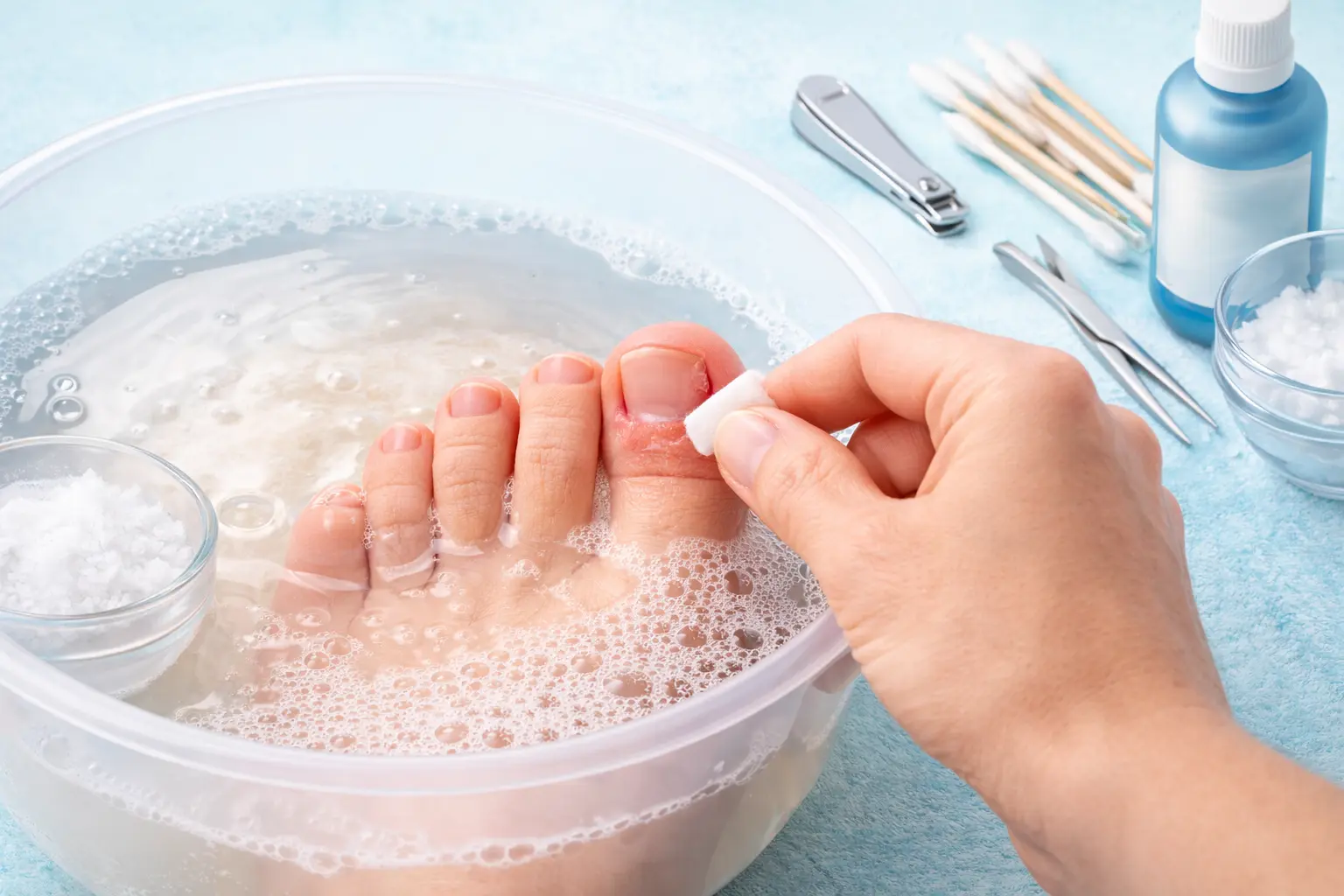
1. Warm Salt Water Soaks
Soak your foot for 15–20 minutes, 1–2 times daily.
This helps:
-
Reduce swelling
-
Soften the skin
-
Ease pain
2. Keep the Area Clean and Dry
After soaking:
-
Dry the toe completely
-
Avoid moisture buildup
-
Change socks daily
3. Lift the Nail Edge Gently
You can place a small piece of clean cotton or dental floss under the nail edge.
This helps guide the nail to grow outward instead of into the skin.
Do this gently.
If it hurts, stop.
4. Wear Proper Footwear
Avoid:
-
Tight shoes
-
Narrow toe boxes
-
Hard pressure on the toe
Opt for:
-
Open-toe sandals
-
Wide shoes with soft fronts
5. Trim Nails Correctly
-
Cut nails straight across
-
Do not round the corners
-
Avoid cutting nails too short
Incorrect trimming is a major cause of ingrown toenails.
What Slows or Prevents Healing?
Even mild cases may not heal if these factors are present:
-
Tight or pointed shoes
-
Repeated trauma to the toe
-
Poor nail-cutting habits
-
Excessive sweating
-
Ignoring early pain
-
Diabetes or circulation issues
People with diabetes should never wait for self-healing without medical advice.
Signs Your Ingrown Toenail Will NOT Heal on Its Own
You should see a doctor if you notice:
-
Pus or foul-smelling discharge
-
Increasing pain
-
Redness spreading beyond the toe
-
Bleeding or overgrown skin
-
Fever or chills
-
No improvement after 7–10 days
These are signs of infection or worsening inflammation.
Medical Treatment Options (When Home Care Isn’t Enough)
A healthcare provider may recommend:
-
Partial nail removal
-
Nail edge lifting with medical tools
-
Antibiotics if infection is present
-
Permanent nail correction in recurring cases
These treatments are usually quick and provide immediate relief.
Can Ingrown Toenails Come Back?
Yes.
Recurrence is common if the root cause isn’t fixed.
Common reasons include:
-
Genetics
-
Improper trimming
-
Repeated shoe pressure
-
Nail shape issues
Preventive care is just as important as treatment.
How to Prevent Future Ingrown Toenails
Simple habits can make a big difference:
-
Trim nails straight across
-
Avoid tight shoes
-
Keep feet clean and dry
-
Protect toes during sports
-
Address foot pain early
Small changes prevent repeated problems.
Frequently Asked Questions
Can I ignore a painless ingrown toenail?
No. Even painless pressure can worsen over time. Early care prevents infection.
Will antibiotics cure an ingrown toenail?
Antibiotics treat infection, not the nail problem itself.
Is surgery always required?
No. Most mild cases heal without surgery if treated early.
Final Thoughts
So, can an ingrown toenail heal itself?
Yes, but only when it’s mild and cared for early.
Waiting too long can turn a small problem into a painful one.
If symptoms worsen or don’t improve, medical treatment is the safest choice.
Early action saves time, pain, and complications.